
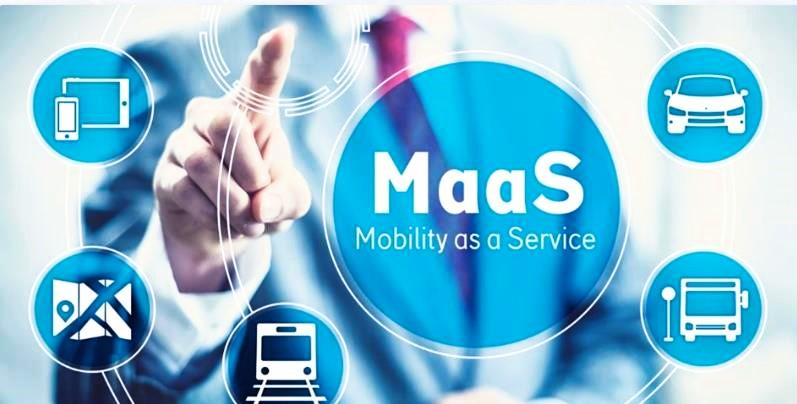
The evolution of Mobility as a Service Market Trends is pointing towards a future where urban transportation is not only seamless but also highly personalized, sustainable, and intelligent. As the industry continues its rapid expansion toward a projected valuation of over USD 754.341 billion by 2032, a journey powered by a strong 17.4% CAGR, several key trends are emerging that will shape its next phase of development. These trends are moving beyond simple aggregation, leveraging advanced technology to create a more sophisticated and value-driven service. For users, this means a more intuitive and responsive mobility experience, while for cities, it promises more efficient and environmentally friendly transportation networks.
A dominant trend is the move toward hyper-personalization, driven by Artificial Intelligence (AI) and machine learning. Future MaaS platforms will not just present a list of options; they will learn individual user preferences and behaviors to proactively suggest the best mobility choices. For instance, the app might know you prefer a scooter on sunny days but suggest the subway during rush hour or a ride-hailing service when you're carrying luggage. This level of personalization will extend to pricing and subscriptions, with platforms offering dynamic, customized bundles based on an individual's unique travel patterns. This shift from a one-size-fits-all approach to a deeply personalized service will dramatically enhance the user experience and increase platform loyalty.
Another critical trend is the deepening focus on sustainability and electrification. As environmental concerns become a top priority for consumers and governments, MaaS platforms are becoming key enablers of green transportation. We are seeing a clear trend where platforms increasingly prioritize and incentivize the use of electric vehicles, e-bikes, and e-scooters within their apps. This includes integrating with EV charging networks to show charger availability, offering discounts for choosing an electric option, and providing users with data on the carbon footprint of their journey choices. In the future, MaaS platforms will be central to managing the complex interplay between shared electric fleets and the energy grid, playing a crucial role in the transition to sustainable urban mobility.
Perhaps the most transformative trend on the horizon is the eventual integration of autonomous vehicles (AVs). The deployment of self-driving taxis and shuttles will be a watershed moment for the MaaS industry. AVs promise to dramatically lower the operational cost of on-demand transport by removing the driver, the single largest expense. This could make ride-hailing services significantly cheaper, more accessible, and available 24/7. MaaS platforms will be the essential interface for summoning, managing, and paying for these autonomous fleets. While widespread deployment is still some years away, the convergence of autonomous technology and the MaaS model is the ultimate endgame for many in the industry, promising to completely reshape our cities and our very concept of personal mobility.
Explore Our Latest Trending Reports:
On Call Scheduling Software Market

 English
 French
 Portuguese
 Italiano