
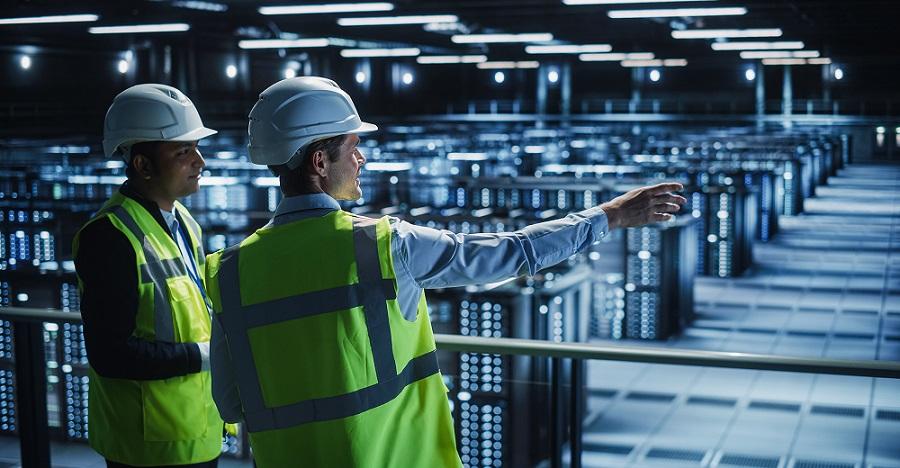
The relentless demand for digital services has created a highly competitive and dynamic environment for data center development. The Us Data Center Construction Market is dominated by a few key categories of players, each with distinct strategies and objectives. At the top are the hyperscalers—tech giants like Amazon Web Services (AWS), Microsoft Azure, and Google Cloud—who are the largest drivers of new construction. They build massive, hyper-efficient campuses to power their global cloud platforms, often demanding hundreds of megawatts of power per site. The second major group consists of colocation providers, such as Equinix and Digital Realty, who build and operate data centers and then lease space, power, and connectivity to a multitude of enterprise clients. Finally, there are large enterprises, particularly in finance and healthcare, that still build their own private data centers for specific security or performance requirements.
Hyperscalers are shaping the market through their sheer scale and their relentless focus on efficiency and speed to market. Their immense capital allows them to pioneer new construction techniques, such as prefabricated modular designs, and to drive innovation in cooling and power distribution to reduce their operational costs (OpEx). Because their demand is so great, they often enter a new geographic region and single-handedly create a new data center hub, driving the development of the necessary power and fiber infrastructure around them. Their construction projects are some of the largest and most complex in the world, requiring partnerships with a select group of general contractors and engineering firms that have the experience and resources to deliver these massive facilities on incredibly tight schedules, setting a high bar for the rest of the industry.
Colocation providers, on the other hand, cater to a broader customer base, ranging from startups to Fortune 500 companies. Their construction strategy is focused on building highly connected and flexible facilities in strategic locations, often creating "ecosystems" where businesses can easily interconnect with partners, carriers, and cloud providers. Unlike hyperscalers who build for their own use, colocation companies must design their data centers to accommodate the diverse power density and security needs of hundreds of different tenants. This requires a more standardized yet customizable approach to construction, often involving building out "powered shells" that can be quickly fitted out to a specific client's requirements. Their success depends on their ability to anticipate market demand and build inventory in key hubs like Northern Virginia, Dallas, and Silicon Valley.
While the trend for many businesses is to move to the cloud, the enterprise-built data center is not extinct. For organizations with extreme security needs, specific regulatory compliance requirements, or high-performance computing workloads that demand ultra-low latency, owning and operating a private data center remains the best option. These projects are often smaller in scale compared to hyperscale or colocation builds but are highly customized and built to the highest standards of resiliency. The construction of these facilities is typically driven by a specific business need, such as supporting a high-frequency trading platform or a large-scale research database. While this segment of the market is smaller, it demands a high level of specialized expertise from the construction and engineering firms involved.
Explore Our Latest Trending Reports:
Water Quality Monitoring System Market

 English
 French
 Portuguese
 Italiano