
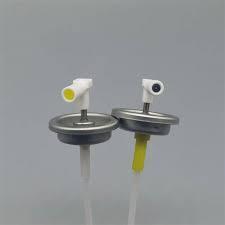
Behind careful assembly lines the notion of an Aerosol Can Valve Factorybecomes real as raw coils and polymer batches are transformed into precision parts. Quality control is not a single checkpoint at the end. It is an integrated practice that begins with incoming material verification and runs through stamping molding assembly testing and packing so that each valve meets performance and safety expectations before it ships. That continuous attention reduces surprises during filling and in the hands of end users.
The first line of defense is incoming material inspection. When metal strip arrives its surface quality thickness and coating uniformity are checked before it reaches the stamping presses. Polymer batches for seals are verified for hardness resilience and visible defects. These initial checks stop problems at the source because flaws introduced at raw material stage are costly to correct later. Factories that document material acceptance criteria and keep batch level records can trace issues quickly if a downstream anomaly appears.
Stamping and forming bring their own control needs. Die condition, press setup and tool alignment are monitored to prevent burrs and wall thickness variance that could weaken the cup under pressure. Inline dimensional checks catch drift and trigger tool maintenance before a large run produces marginal parts. Regular preventive maintenance of dies and presses is a quality action that keeps geometry within target tolerances and preserves fatigue resistance in cans and valves.
Seal molding and handling are another controlled area. Elastomer gaskets are molded in clean conditions, then inspected for surface defects and dimensional consistency. Because seals are chemically sensitive, the factory verifies compound batches against expected formulation classes so that swelling, softening or cracking in service is unlikely. Clean handling, correct curing and careful palletizing protect sealing surfaces until assembly. These steps are often invisible on a product page yet they are central to functional reliability.
Assembly blends automation and human oversight. Automated pick and place machines ensure repeatability, while manual inspection points catch subtle fit issues that cameras might miss. Crimp torque and valve alignment are controlled with jigs and torque tools to deliver consistent sealing force. Immediately after assembly many plants run pressure or leak tests so units with marginal sealing are removed before any packaging steps. That inline testing prevents a leaking valve from reaching the filler and reduces costly recalls or rework.
Functional testing is engineered into the flow. Flow and spray pattern checks validate that a valve will dispense as intended with the targeted product family. Endurance cycles catch wear modes that only appear after many actuations. Leak testing under pressurized conditions simulates storage and transit stresses and finds defects invisible to visual inspection. By tying these results to batch codes the factory preserves traceability to tooling, operator and material lots so problem solving becomes root cause focused rather than speculative.
Surface protection and coating lines receive focused attention because liners and coatings isolate metal from aggressive formulations. The factory inspects coating adhesion and continuity and samples coated parts for chemical resistance before assembly. A poor coating at the valve or cup can lead to localized corrosion that compromises sealing. Integrating these checks into production prevents early life failures and supports longer shelf life for filled products.
Environmental controls and clean practices are part of routine quality measures. Temperature and humidity influence polymer curing and coating behavior so critical zones maintain controlled conditions. Contamination control prevents metal shavings and debris from entering sealing surfaces. Training programs teach operators to recognize subtle defects and to follow containment protocols when anomalies appear. The human element paired with instrumented checks closes gaps that single approaches leave open.
Packaging and traceable shipping complete the quality chain. Valves are packed in protective trays that guard seating faces and prevent deformation during transport. Batch codes and inspection summaries accompany lots so buyers receive a documented provenance for each shipment. That documentation allows fast containment and focused corrective action if a field issue emerges rather than broad and costly market interventions. Transparent traceability shortens response time and preserves market continuity.
Continuous improvement turns quality control into a living process. Data from inline inspections, field returns and operator observations feed analysis that updates tooling tolerances inspection points and training content. When a factory ties quality metrics to corrective work orders the process becomes adaptive. That means the assembly line gets better at preventing recurring defects instead of just catching them later down the chain. For customers this reduces variability in valve behavior and makes integration with filling operations more predictable.
Collaborating early with customers is a practical way to embed quality into product launches. Sharing formulation profiles expected storage and distribution conditions and planned use cases lets the factory propose valve geometries seal compounds and testing protocols matched to reality. Early prototyping in the factory environment exposes interface issues before full production and shortens the validation cycle for both the brand and the supplier. That alignment reduces the risk of late stage changes that slow market entry.
In times when supply chains and market demand shift rapidly, integrating quality control at each stage gives resilience. Automated lines reduce variability while documented inspection routines enable rapid scale up without sacrificing functional performance. When a supplier publishes that it maintains full production traceability and routine 100 percent inspection it signals operational discipline that buyers can rely on for steady supply and consistent product performance. For product teams looking for valve families and production notes the supplier portal offers detailed references and configuration guidance at https://www.bluefirecans.com/ .

 English
 French
 Portuguese
 Italiano