
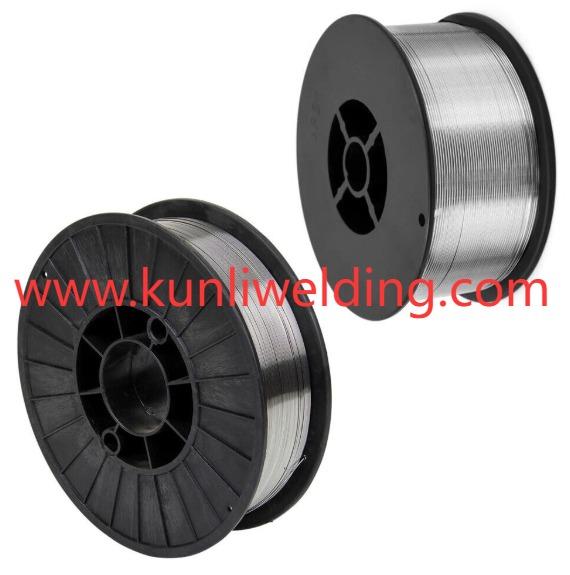
When operators need steady arcs and fewer feed interruptions on aluminum joins, Aluminum Mig Wire Manufacturers often focus on the small mechanical and metallurgical steps that make wire run smoothly through a gun. Achieving reliable feeding is not accidental: it begins in the mill and continues through drawing, spool winding and final packaging. As public projects and renewable energy programs place new pressure on uptime, these upstream details translate directly into fewer stoppages on the floor and faster project delivery.
Good feedability begins with the wire itself. Manufacturers set tight drawing tolerances and control surface finish so the wire stays round and free of nicks that catch inside liners or on drive rolls. Thoughtful drawing practice reduces work hardening in ways that preserve ductility and allow the wire to bend and unwind without cracking. That metallurgical discipline prevents brittle spots that can break or shave under drive roll pressure and avoids irregularities that trigger bird nesting in the liner.
Spool design is the next decisive factor. Well engineered spools have smooth hubs and flanges that guide the pack without sharp turns. Winding tension matters: too tight and the pack locks up creating drag; too loose and the coil shifts on the spool during transport, creating unpredictable release at the gun. Manufacturers that control spool geometry and winding practices reduce eccentricity so the wire pays off with low friction and steady feed rates. Those packaging details also protect the wire during long shipments to remote sites.
Surface protection and packaging preserve feedability until the moment the reel is loaded. Aluminum wire picks up contaminants and moisture that make the arc unstable and lead to porosity. Producers that wrap spools in sealed films with desiccant inserts and that advise on conditioned storage help shops avoid unwanted rework. Clear lot labeling and production notes also let quality teams track any anomalies to a single spool rather than halting an entire run while chasing the source of a problem.
Match the drive system to the material. Drive roll profile and tension settings are small adjustments with large effects. For soft aluminum many shops use U groove drive rolls that cradle the wire without shaving it. Properly set drive tension is critical: too much force crushes soft wire and produces shaving that binds liners; too little force allows slipping that causes irregular feed and burnback. Manufacturers recommend specific roll profiles and tension ranges as part of the product notes so welders start from a reliable baseline.
Liner condition and path geometry are shop level contributors to smooth feeding. Clean, correctly sized liners reduce drag and prevent kinks. Shorter liners or spool guns shorten the feed path and remove a common source of feeding glitches in manual welding and in cells with variable torch reach. When liners are replaced on a schedule and feed paths are kept as straight as possible, operators see far fewer feed stalls and bird nests. Practical maintenance routines at shift start prevent many common interruptions.
Quality control at the factory reduces surprises in the field. Dimensional audits that verify diameter consistency, tensile properties and winding tension keep reel to reel variability low. Producers who reject out of tolerance reels and who keep lot records create a predictable input for automation and manual work alike. This upstream discipline shortens the time needed to qualify material on actual feeders and cuts the number of trial passes needed before production begins.
Operator technique and training tie all technical measures together. Even perfectly produced wire can feed poorly if spool mounting is sloppy or if feed tension is set incorrectly. Training operators to mount spools squarely to the carrier to set tension within recommended ranges and to check liners and drive rolls before each shift reduces human error. Simple checklists that include spool seat fit liner cleanliness and contact tip condition keep arcs steady and make maintenance predictable rather than reactive.
For automated cells the devil is in the details. Robots demand continuous, predictable wire delivery and will amplify small feed problems into major stoppages. Manufacturers who control spool eccentricity, provide consistent spool bore finishes and offer guidance on drive roll selection help automation engineers keep cycle times steady. When suppliers provide trial reels and feed recommendations for specific feeder models, system commissioning goes faster and downtime drops.
Field conditions matter too. For outdoor jobs and long logistic chains, protective packaging and clear conditioning steps at the jobsite prevent moisture related defects. A spool that arrives damp or dented often forces local drying and extra trials that add hours to commissioning. Suppliers who publish handling guidance and who offer sealed spool options make it simpler for teams to get from receipt to reliable welding without repeated adjustments.
In short, smooth feeding is the result of coordinated attention across metallurgy, spool engineering, packaging, drive systems and operator practice. Aluminum MIG wire manufacturers who align drawing control spool geometry packaging and clear setup guidance turn a potentially finicky input into a predictable one. The payoff is fewer interruptions, fewer reworks and faster ramp from trial to steady production—especially important as public and private projects demand higher uptime and documented supply practices. For product details and recommended handling for ER5183 series wires see the manufacturer product notes. For manufacturers and buyers interested in product options spooling formats and handling guidance visit the product page at https://bit.ly/3KdQcCH .

 English
 Español
 Portuguese
 Italiano